





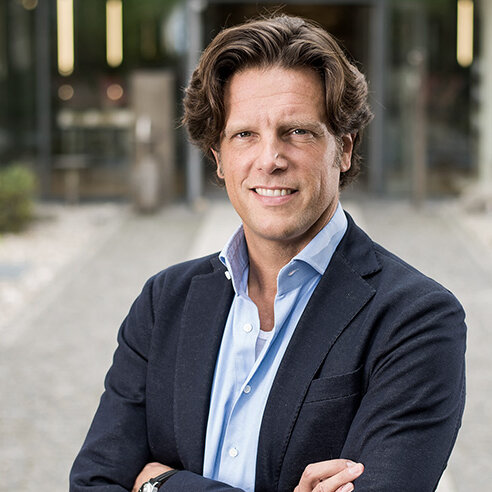




Marcus Lingel
Chairman of the Executive Board, Merkur Privatbank
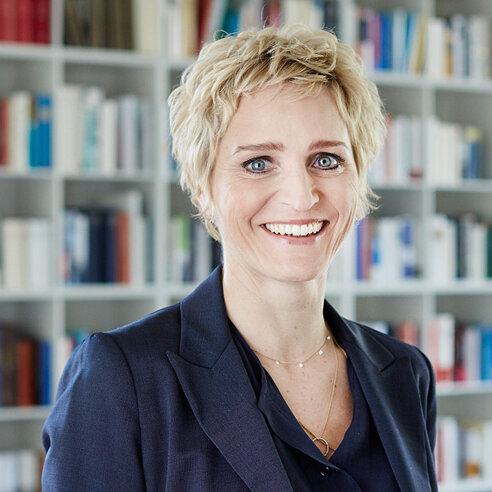
Nina Hugendubel
Managing Partner, H. Hugendubel GmbH & Co. KG
Heimo Scheuch
Chairman of the Board of Wienerberger AG
Rüdiger Kasch
Managing Director, Alnatura Produktions- und Handels GmbH
Hannes Berger
Chairman of the Board Dr. Schär
Michael Durach
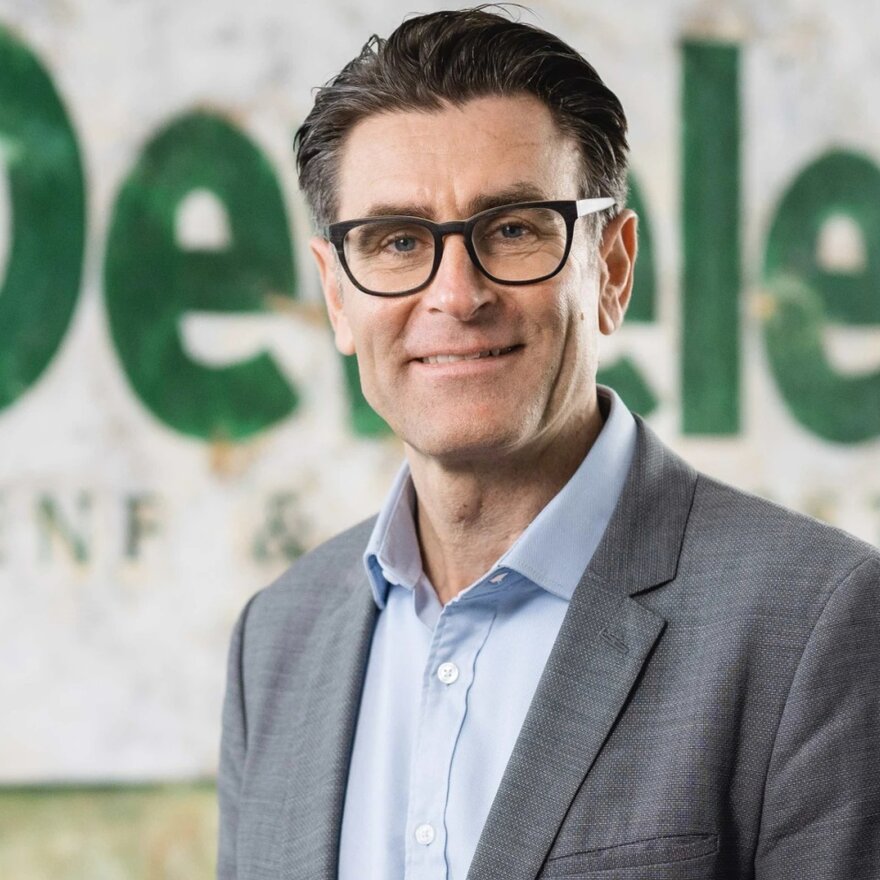
Managing Director, Develey
Florian Haller
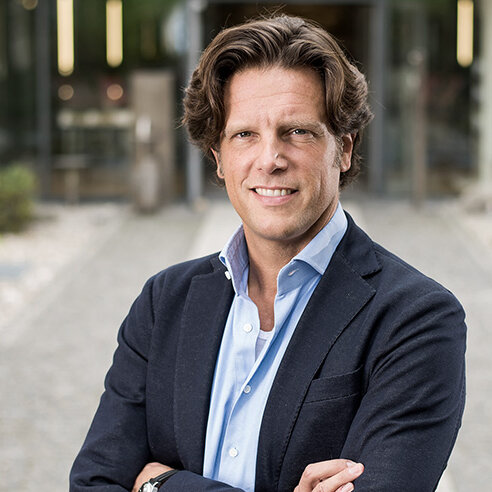
Owner and CEO of the Serviceplan Group
Hasso Kaempfe
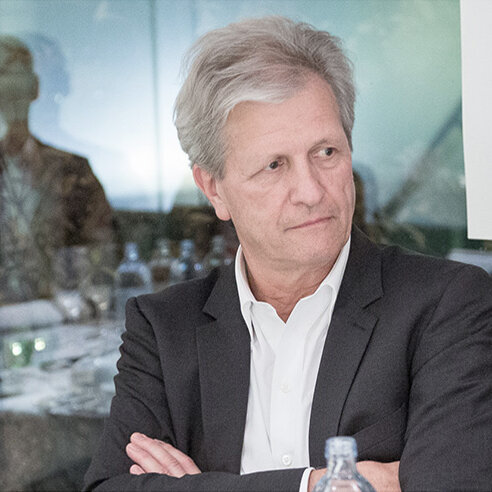
Formerly Hero AG / Currently consultant and deputy chairman of the supervisory board of Falke KGaA
Sandeep Walia
Chief Operating Officer, Middle East & Luxury for Europe, Middle East, and Africa, Marriott International
Werner Zenz
Spokesperson for the Board of Directors at Bankhaus Carl Spängler & Co. AG
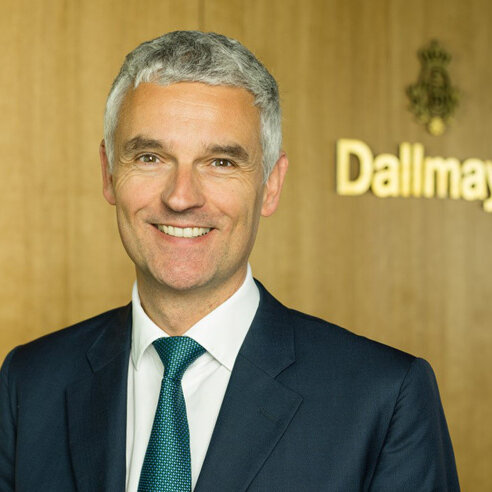
Johannes Dengler
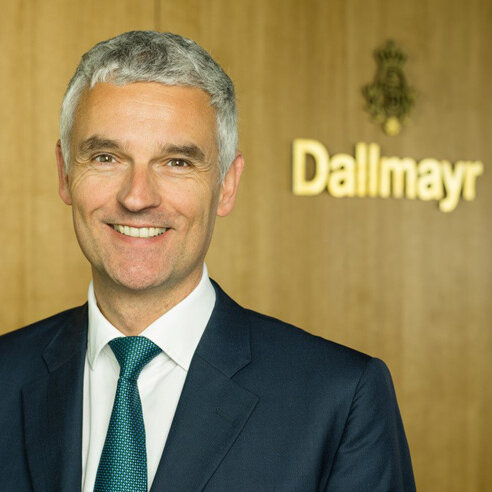
Partner at Alois Dallmayr Kaffee oHG
Joachim Oberrauch
Managing Director at FINSTRAL S.P.A. & FINSTRAL AG
Heiner Oberrauch
Chairman of the Board of Directors of the Oberalp Group (Salewa, Dynafit, Pomoca, Wild Country, Evolv, LaMunt)

Chairman of the Executive Board, Merkur Privatbank

Marcus Lingel

“It would be a mistake to define a brand once and for all and then stick to it no matter what. A brand must be alive. A brand is not a hard fact.”

How important is branding to the management of your company?
Branding is very important to the management of MERKUR PRIVATBANK. For us, branding is linked to our vision. Specifically, our brand helps us to achieve our vision. Our vision is to become the largest and most profitable owner-managed bank in Germany by 2030. In principle, we have set ourselves a growth target. This is an internal vision. All of our employees are aware of this goal, and we regularly reinforce this message.

How does the brand specifically help you manage your company and make decisions?
For us, the brand is above our vision. The growth mandate mentioned above from the vision helps us to realize our brand. The claim and brand essence that we communicate to our MERKUR PRIVATBANK customers is: Unique entrepreneurial banking. The brand essence provides a framework that we and every employee can use for guidance. This is also linked to the creation of a mindset that is used for decision-making. I can illustrate this with an example. We have also set ourselves the growth mandate in asset management. The brand serves to differentiate our products. We have offerings that are at the top of the service pyramid and products that offer excellent standard performance. A "full version" and a "stripped-down version," so to speak. Ideally, however, our customers feel that they are receiving top performance in every case. According to my mindset, top performance is a natural add-on for us.

In your opinion, what are some mistakes in brand management that should be avoided?
It would be a mistake to define the brand at some point and then leave it fixed, come what may. A brand must be alive. A brand is not a hard fact. A living brand continues to evolve, becoming increasingly focused and therefore increasingly better. We have noticed this ourselves at MERKUR PRIVATBANK: the brand development process has guided our decisions. This helped us to focus on specific areas. This focus on the brand core has given us momentum for growth: despite the current difficult economic environment for many other banks, we achieved our best ever results in 2021 and hired 80 new employees. I am certain that the brand plays a role in this positive development.

What advice would you give other companies regarding brand management?
My clear recommendation is to build a brand. It seems to me that many other companies are not doing this at all. I also recommend communicating the brand values clearly internally. Values must first be lived internally by all employees, including, of course, the management team. The myth must be created internally and then communicated externally.

Which company do you admire for its brand management?
There are several. Off the top of my head, I would say BMW, Porsche, or Adidas. BMW's brand message is "Sheer Driving Pleasure." That is the great internal myth. There is enthusiasm for the product. When I talk to BMW employees, their enthusiasm and loyalty to the brand is striking. Another great example is the HIPP company. As an owner-managed company, HIPP is comparable to us, MERKUR PRIVATBANK. At HIPP, the owners also stand for the corporate values, for the brand essence. I do the same. When there are such guardians and credible representatives of the values, it increases the credibility of the brand.


Chairman of the Board of Wienerberger AG

Heimo Scheuch

“Our brand reflects our market position. It is an expression of the quality of our products, our company, and our management.”

How important is the brand to the management of your company?
Very important! As a 100% free float company, the brand has the highest value on the financial markets. The brand is an expression of the quality of our products, our company, and our management, and reflects our market position. Customers are willing to pay premium prices for the strong Wienerberger brand.

How does the brand specifically help you manage your company and make decisions?
Our brand has an external and internal impact; it is an expression of our strong corporate culture. We always make important decisions with the positioning of our Wienerberger brand in mind. The content of our brand flows into all areas and functions, and it is also increasingly relevant in employer branding.

In your opinion, what are some mistakes in brand management that should be avoided?
Brand management and maintenance must be centralized so that no compromises are possible. This enables us to send clear messages.

What advice would you give other companies regarding brand management?
First, think carefully! Only then should you develop your corporate strategy and brand content and consistently align them with each other.

Which company do you admire for its brand management?
In our industry:

  • Geberit for pipes and sanitary applications,
  • Sika for technical solutions and innovations
  • Knauf for its processing expertise and customer benefits
  • Hilti for its high level of sales expertise
  • And Wienerberger, because it's the coolest company.

Managing Partner, H. Hugendubel GmbH & Co. KG

Nina Hugendubel

“Brand management is a collaborative effort at our company, from senior management to the booksellers who maintain contact with customers.”
How important is branding to the management of your company?
Branding is very important to us. It serves as a source of trust for employees and customers. It serves as a guide for many of our strategic decisions. Since our managers and booksellers in particular know what the company stands for, they can make decisions much more easily, clearly, and effectively.

How does the brand specifically help you manage your company and make decisions? At
Hugendubel, we have clearly defined values that we adhere to. This applies not only to our interactions with customers at the point of sale, but also to our interactions with suppliers, service providers, and other stakeholders. I am convinced that this is precisely why we have very good, long-standing relationships with our suppliers and a high level of employee loyalty.

In your opinion, what are some mistakes in brand management that should be avoided?
A brand is not just a logo. Brand management is a collaborative effort: from company management to the booksellers who have contact with customers. Everyone in the company should live by the brand values.

What advice would you give other companies on brand management? Good
brand management involves the entire organization, including the employees. Good brand management clearly defines its brand values and is guided by them in an authentic and confident manner.

Which company do you admire for its brand management?
Of course, international brands such as Apple or Nike immediately come to mind. These brands are managed so stringently that they are instantly recognizable all over the world. But if you look at the regional level, examples such as Dallmayr also come to mind: a very consistently managed brand that has stood for tradition since its inception, where you immediately have a clear brand image and even a smell in your mind. I think that's great.


Managing Director, Alnatura Produktions- und Handels GmbH

Rüdiger Kasch

“Maintaining consistency in brand management is an important recommendation. This consistency also provides guidance for employees.”

How important is branding to the management of your company? At Alnatura
, we manage the company through our brand. We view the spirit of our brand as a living organism that permeates our entire company. The Alnatura brand embodies the vision of "meaningful for people and the planet." We align all our actions with this vision, whether we are cooperating with new trading partners or building a new warehouse. Take our warehouse, for example: we built it using trees from the Odenwald region. We replanted every tree we used. When we built the Alnatura office building a few years ago, we also focused on sustainable construction: the building is practically a passive house, some recycled building materials were used, and it has clay walls. The Alnatura Campus was built on a former concrete-sealed American military site, which Alnatura returned to nature. We have created leased land for organic gardens and built a Waldorf kindergarten here. Our vision of "meaningful for people and the planet" permeates everything we do.

How does the brand specifically help you run your business and make decisions?
The brand, or more precisely, the brand soul, is a common thread running through our company. With every decision we make, we ask ourselves: Does this decision best reflect our brand?
In order to make decisions that are in line with Alnatura's values, every new employee is trained in our brand soul. We are currently planning to expand our logistics facilities. We are considering how we can implement a sustainable solution. Finding a good solution is also a major challenge for us. Alnatura often decides against things that would be economically advantageous but are not acceptable to us for ecological or sustainability reasons.

In your opinion, what are some mistakes in brand management that should be avoided? For
me, the first mistake is thinking that a branded item, the product, is the brand. I think this is often confused. Another mistake is to believe that brand management is the responsibility of the marketing department or an external advertising agency. That cannot work. Advertising does not make a brand better; credibility and consistency do. In my opinion, brand management must be driven from within. It is the responsibility of the company's management to clearly embody the brand's spirit within the company.

What advice would you give other companies regarding brand management?
That's an interesting question. When it comes to brand management, I recommend that other companies stay on their own playing field and not stray from where they have positioned their brand. You often see this kind of maneuver when a brand gets into trouble. Companies then try to break away from the brand's core. In Alnatura's case, for example, it would be a mistake to compete with cheap organic suppliers. We would then be unable to meet our own quality standards or our social standards. Maintaining consistency in brand management is an important recommendation. This consistency also provides guidance for employees.

Which company do you admire for its brand management?
Even though I'm not a watch fan, I think the Rolex brand is an admirable example. Rolex has a clear product with clear positioning, communication, and target group. The brand's sponsorship commitments, such as sailing, equestrian sports, tennis, golf, and cultural events, are also in line with the brand. The watches have also hardly changed in appearance for decades. The brand's recognizability has been maintained. That is exciting brand management. Incidentally, Alnatura has also been consistent for 30 years: we want to offer the best organic quality at affordable prices.


Chairman of the Board Dr. Schär

Hannes Berger

“Excessive product range expansions dilute every brand.”

How important is the brand to the management of your company?
The brand is directly linked to the strategic orientation of our company: Dr. Schär is THE leading brand manufacturer for gluten-free nutritional needs and, through clear focus, manages to defend its position as an innovation and quality leader in its home markets and establish itself in new markets.

How does the brand help you manage your company and make decisions?
The brand gives the company and our products a specific character and symbolizes our commitment to quality and innovation for our consumers.

In your opinion, what are some mistakes in brand management that should be avoided?
A successful branded goods company can also be a leading manufacturer of discount or private label products.

What advice would you give other companies regarding brand management?
Brand management must be a long-term endeavor. Avoid frequent changes in brand image and excessive product range expansions. They dilute the brand and confuse consumers.

Which company do you admire for its brand management?
Illy—the brand impresses with its uncompromising quality policy, a streamlined product range, a consistent brand image, and bold price positioning.


Managing Director, Develey Mustard & Delicatessen GmbH

Michael Durach

"Alongside our employees, the brand is the most important asset in our company."
How important is branding to the management of your company?
Alongside our employees, branding is the most important asset in our company.

How does the brand help you manage your company and make decisions?
Brand management requires long-term decisions that are relevant to customers.

In your opinion, what are some mistakes in brand management that should be avoided?
Constant change or inaction will not solve sales problems. A brand must meet the needs of all customer groups.

What advice would you give other companies regarding brand management? Be
consistent and honest.

Which company do you admire for its brand management?
Nike.


Owner and CEO of the Serviceplan Group

Florian Haller

"Due to increasing volatility, brands are losing their role as beacons or points of reference."
How important is branding to the management of your company?
Naturally, it is very important. Our agency brands are a valuable asset. They are essential for generating new business and enable us to charge premium prices.

How does the brand help you manage your company and make decisions? We
do that ourselves. But that doesn't mean it runs "by itself." On the one hand, we regularly seek advice from our brand strategists at the Serviceplan Consulting Group. On the other hand, the topic of branding is directly linked to our holding company. This ensures that we maintain strategic distance while still paying sufficient attention to this central issue.

In your opinion, what are some mistakes in brand management that should be avoided? I see
the biggest issue as the increasing volatility of brand decisions. Based on my observations, this stems from two sources
:the increasing turnover rate in marketing. A CMO who survives in their job for more than three years has become the exception.The many channels through which brands now
have to communicate. From the consumer's point of view, these two factors together lead to increasingly fractal brand images. As a result, brands lose their beacon or orientation function.

What advice would you give other companies for brand management?
Think carefully about where you want to position your brand. Then stick to it. And maintain this image across all channels, especially digital ones.

Which company do you admire for its brand management?
BMW. For the joy of driving. What else?


Formerly Hero AG / Currently consultant and deputy chairman of the supervisory board of Falke KGaA

Hasso Kaempfe

“Good brand management prevents opportunistic individual decisions and short-sighted thinking.”
How important is branding to the management of your company?
Brands are a key differentiator in the competitive environment and provide guidance for employees and reassurance for consumers in terms of tradition, quality standards, and image. Their importance within the company is reflected in the position of Chief Marketing Officer (CMO) at group management level and the group-wide networking of all those responsible for branding and marketing. The local freedom of country managers is limited when brands are used in several countries or product categories.

How does the brand help you manage your company and make decisions?
Brands determine the attitude of the company and the mindset of its managers. With good brand management, they prevent opportunistic individual decisions and force goal-oriented, long-term thinking. They also clearly document the value of the company.

In your opinion, what are the mistakes in brand management that should be avoided?
Brands are artificial constructs created by people that are not bound to a static brand core that has been defined once and for all. By clinging to outdated internal ideas, a brand can lose its relevance. What a brand represents is not defined by the brand owners, but by the users. With very heterogeneous users, there are only subjectively perceived brand cores, which can differ from one another when taken as a whole. Those who fail to recognize this will fail to communicate effectively with their customers.

What advice would you give other companies for brand management?
90% of brand management consists of renunciation, which requires the art of saying no. There are too many ideas that may not do any harm, but are also of no use and jeopardize the clarity of the brand's image. Focus and radical consistency in brand management are becoming increasingly essential, as brand owners are now just one stakeholder in brand communication. Whereas messages used to be sent unilaterally, today there is more communication about a brand. Those who do not try to manage this process flexibly and transparently will lose brand sovereignty.

Which company do you admire for its brand management?
That depends on your perspective...


Chief Operating Officer, Middle East & Luxury for Europe, Middle East, and Africa, Marriott International

Sandeep Walia

“Every experience or innovation that we introduce in our luxury hotels is brand driven.”

How important is brand to your company?
I believe that the strength of our company comes from the diversity and combination of our brands as they help guests/consumers make choices. Brand differentiation and brand experience are key focuses for our company. With a new lens on luxury and courtside seats to the fast-evolving expectations and aspirations of the global traveler, we are obsessed with creating strong brands that will elevate travel with highly contextualized, nuanced brand experiences that signal the future of luxury. We are so privileged at Marriott International in Europe to be able to offer luxury hotels under eight hallmarks that cater to a new affluent traveler, no matter if their priority is staying at the best address in town, immersing themselves in the destination, or focusing on wellbeing. Every experience and innovation that we introduce in our hotels is brand driven.

How does the brand help you to run your business and make decisions?
We see luxury travel experiences as a launch pad for self-actualization, with bucket lists evolving from where you want to go and what you want to see to who you can be. Our guests are seeking out experiences that help them express who they are, so their approach to luxury continues to be less formal, entirely more personal, and defined more by their interests and mindset than their geography and demographics. And they want more than just to trust a hotel brand. They want to align with a company's brand pillars, more consciously than before, that advocates for their priorities. This is why we are focused on making sure that we set each brand apart by highlighting nuanced differences and leaning into specific brand touch points and product cues. This impacts our business decisions, the partnerships that we establish in our hotels, but also the audiences that we target.

In your opinion, what are the errors of brand management that should be avoided?
Brand management is one of my passion points and I have been following many luxury brands’ strategies and have seen their ups and downs. The most important factor is to ensure that the brand is distinctive enough to stand out from the competitors. It all starts with determining the right value proposition. The process requires careful definition of the strongest selling point and the target audience. Misunderstanding leads to a misrepresented brand, which negatively affects the image, the customer experience, and ultimately the bottom line.
Another mistake would be inconsistency, which has always been a branding misstep. Especially now, in the era of content marketing and digital branding, being consistent with messaging and on-brand experiences is key to success. The most successful brands consistently deliver on their promise. They paint a picture in the minds of consumers of what they can expect from a product, service, and quality standpoint.

What advice would you give to other companies regarding brand management?
In an increasingly globalized and connected world, modern consumers, especially in the luxury travel space, are looking for authenticity, customization, and on-brand service. This coincides with a collective, increased dependency on technology, the "millennial state of mind," and the behavioral characteristics of uneasiness, urgency, and uniqueness that are increasingly permeating across all generations. Brands should be working on providing services on demand and connectivity to cater to the notion that anything is available anytime, anywhere.

Which company do you admire for its brand management?
For many years, I have admired Hermes for its passion for cultivating heritage, uniqueness, and consistency. To me, this brand is an icon in the world of luxury. It all starts with the quality of the product, its craftsmanship, and eye for detail, and continues through the professional service at each of their boutiques and storytelling. The brand knows no compromises, is consistent, and loyal to its philosophy, which makes it unique.


Spokesperson for the Board of Directors at Bankhaus Carl Spängler & Co. AG

Dr. Werner Zenz

“Best in family banking – this positioning makes us distinctive and unique.”

How important is branding to the management of your company?
The Bankhaus Spängler brand has developed and established itself over many years: Bankhaus Spängler is Austria's oldest private bank (since 1828) and is still family-owned. This has become ingrained in the minds of people (customers and employees). To ensure that the bank remains well positioned in the future, we have a clear brand orientation that is part of our strategic planning. Our motto is: Best in Family Banking. This has given us a strong unique selling point. Brand management is a "top priority." It is crucial that managers and employees know and internalize our performance promise and carry it throughout the entire company as multipliers. After all, they are ultimately and above all the brand ambassadors.

How does the brand help you to manage your company and make decisions?
Our brand is the foundation of our strategic orientation. Personal contact with customers, independence, risk awareness, and a forward-looking approach are central elements of the Bankhaus Spängler brand, and form the basis for our decisions. We work with strategic tools so that both managers and employees know where we are headed, can identify with the brand, and can exemplify it. This helps us to continue to position the bank strongly and distinctively in the market, strengthen our integrated advisory approach, and successfully implement our digitalization strategy.

In your opinion, what are some brand management mistakes that should be avoided?
Brand management is not the responsibility of the marketing department, but must be supported by the CEO and should never be reduced to the logo and good advertising – these are only part of the picture. Rather, the entire company is an expression of the brand and contributes to the implementation of the value proposition. In the banking sector in particular, there are many points of contact with customers via employees. If the performance promise has been communicated incorrectly or inadequately to employees, the brand message cannot be conveyed to customers.

What advice would you give other companies for brand management?
A strong brand forms the foundation of a company. If the brand understanding is clearly anchored in the organization and the employees "live" the brand, the company will be perceived as authentic by customers. This creates trust. This is particularly important in the financial sector. Active brand management leads to a "perpetual motion machine" of trust between companies and customers, so to speak.

Which company do you admire for its brand management?
Red Bull, Apple, and Google, for example, are brands that have now achieved cult status – among customers and employees alike. The identity of the brand shapes the thinking and actions of the company. If employees identify with the brand and enthusiastically promote it to the outside world, a company has done a lot right in terms of brand management. The size of the company is irrelevant. It's not just global corporations that can have a strong brand; every company can differentiate itself through a clear brand strategy.


Partner at Alois Dallmayr Kaffee oHG

Johannes Dengler

“The brand also creates internal identification for the people who work here.”
How important is branding to the management of your company?
Dallmayr is one of the leading coffee brands in Germany, the third-largest coffee market in the world (after the US and Brazil). The single product Dallmayr Prodomo is the favorite coffee of Germans and the third-strongest single product in the German food retail sector (after Kerrygold butter and Coca-Cola liter bottles, by the way).

Our brand is effective and central to us, both internally and externally. Internally, it provides us with guidance and calibrates our actions every second. Many decisions can be made habitually or intuitively based on the benchmark: "Does this advance the brand?" or "Does this fit with the brand?" without having to question or calculate everything in detail. The brand also creates internal identification for the people who work here. I think that, when in doubt, they cannot distinguish whether they are working for the brand or for the company. Externally, without the brand, we would be "nothing," a "nobody."

How does the brand help you to manage your company and make decisions?
I think I've already answered that above.

In your opinion, what are some mistakes in brand management that should be avoided?
– Making important decisions based on a consumer panel without your own opinion or intuition.
– Being overly optimistic about being able to "reposition" a brand within a short period of time.
– Rotating product managers or agencies who constantly question everything.

What advice would you give other companies about brand management? Understand
and internalize the true core of the brand, and don't change its positioning, or only do so very slowly.

Which company do you admire for its brand management?
Lindt and Apple. Apple is kind of obvious, everyone loves it. Lindt has been outstanding in its long-term focus on quality and in keeping this promise throughout the entire process chain for decades.


Managing Director at FINSTRAL S.P.A. & FINSTRAL AG

Joachim Oberrauch

"The desired brand, i.e., the company's reputation, must be noticeable at as many touchpoints as possible."

How important is branding to the management of your company?
Right after the basic strategic orientation, the brand profile translates the attitude of all those involved.

How does the brand help you manage your company and make decisions? Strategic areas of activity and
operational tasks are based on the strategic brand profile.

In your opinion, what are some mistakes in brand management that should be avoided?
The desired brand, i.e., the company's reputation, must be noticeable at as many touchpoints as possible. Designing individual touchpoints is not enough and can even be detrimental to the reputation.

What advice would you give other companies regarding brand management?
First work on brand-compliant content (attractiveness) and then on form (design of the point of contact), not the other way around.

Which company do you admire for its brand management?
Red Bull.


Chairman of the Board of Directors of the Oberalp Group (Salewa, Dynafit, Pomoca, Wild Country, Evolv, LaMunt)

Heiner Oberrauch

“Brand management often means making sacrifices.”

How important is branding to the management of your company?
At our company, the brand drives the business. In all decision-making processes, we ask ourselves what the decision means for the brand.

How does the brand help you manage your company and make decisions?
See above.

In your opinion, what are some mistakes in brand management that should be avoided?
A brand grows through attraction, not expansion. Especially in difficult times, there is a great temptation to stretch brands in order to generate new sales.

What advice would you give other companies on brand management?
Brand management often means making sacrifices; you have to ask yourself, "What will this bring me in 3–5 years?" Brand management is also closely linked to distribution policy.

Which company do you admire for its brand management?
Kohl Bergapfelsaft.